Functional Medicine Tests And Autism
I get asked this a lot, so let me answer it straight: are OAT tests, FRAT tests, MTHFR panels, stool tests — are they necessary? Honestly? No. You can raise your autistic child, support him, love him well, and never once hear those words. Most parents do exactly that.



What Most Families Actually Get
In South Africa, for most parents, diagnosis itself often doesn’t come from a doctor — it comes from a clinic sister, because there simply aren’t enough doctors to go around. From there, care tends to follow symptoms, not systems.
Gut issues like Chronic diarrhoea or constipation are treated with medication from the clinic. If the symptoms persist, you can get an appointment with a doctor at the Hospital – that can take up to 6 months. If a child becomes a picky eater, and you’re lucky, you get referred to an OT who can help build up tolerance to new foods. If not, you adapt your own cooking as best you can — though I’ll be honest, try telling a family that eats maize meal every day that they need to diversify their child’s diet. That’s not always a realistic ask, and it’s not a failure when it doesn’t happen.
If aggression is the struggle, the answer is usually Risperdal or an ADHD medication, whatever the clinic has on hand. If you’re fortunate, your child’s school has a sensory room. If not, you make do at home.
That’s one world. It’s real, it works for most families, and nobody in it has failed their child by not knowing what an FRα antibody is.
What Access Actually Looks Like
I want to be honest about what “services available” means in practice, because it’s easy to assume a diagnosis opens doors that, in reality, stay mostly shut. My son was placed in a government special needs school with a speech therapist and an occupational therapist on staff. He never saw either of them one-on-one — there were too many children who needed it more urgently than he did. What he got instead was group work: therapists briefing the class teacher on what to reinforce, and a teacher with ten children in her class trying to deliver that support alongside actual schoolwork. You can guess what gets prioritised when time runs out. Meanwhile, our local clinic has its own speech therapist and OT, serving thousands of people across the area — but because my son’s school technically has those services, the clinic could only offer him limited access, services he was never actually getting at school in the first place. He fell into a gap between two systems, each of which assumed the other was covering him.
The only real option left was the private sector. Which costs money most families simply don’t have.
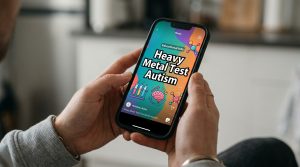
I say all this not to complain about the system, but because it matters for the question this post is actually asking. If a parent sees a Reels clip claiming their non-verbal child needs a FRAT test to get access to Leucovorin, and that’s genuinely the pathway to real support — I understand the appeal completely. When the public system can’t give your child what he needs, of course you go looking elsewhere. That instinct isn’t wrong. But it’s worth knowing what you’re actually walking into.
The Other Side
Then there’s the world I ended up in — the one where you learn about methylation, functional testing, supplement forms, receptor antibodies, and suddenly you have pages of information you didn’t have six months ago.
Here’s what nobody tells you about that world: having the information doesn’t mean you know what to do with it.
I’ll be honest — I’m still in that world, and I’m still figuring out what to do with everything I’ve learned. More data isn’t automatically more clarity. Some of it has helped. Some of it just sits there, technically true and practically useless until I find the right person to help me interpret it.
Neither World Has Failed
So if you’ve never run a single one of these tests, you haven’t failed your child. And if you’re buried in results you don’t fully understand, you haven’t failed either. Both worlds are shaped as much by what’s actually accessible to you as by what you know or don’t know. Neither one has this figured out perfectly. We’re all just doing our best with what we’ve got, inside a system that too often makes “best” a much smaller word than it should be.