Intestinal Microbiomes – “Your Gut, Your Second Brain.”
Please note: The content of this post is my own unless the technical terms are too hard to explain, then the content is copied and pasted. I am not a medical professional, and thus the post is my point of view. But the content is science-based and credible.
Part 1
Many individuals on the autism spectrum commonly experience yeast and mould imbalances, which often manifest as gastrointestinal issues.
This section looks at the markers for Mould (Aspergillus), Bacterial overgrowth, Fungal overgrowth, Yeast (Candida) and Clostridia.
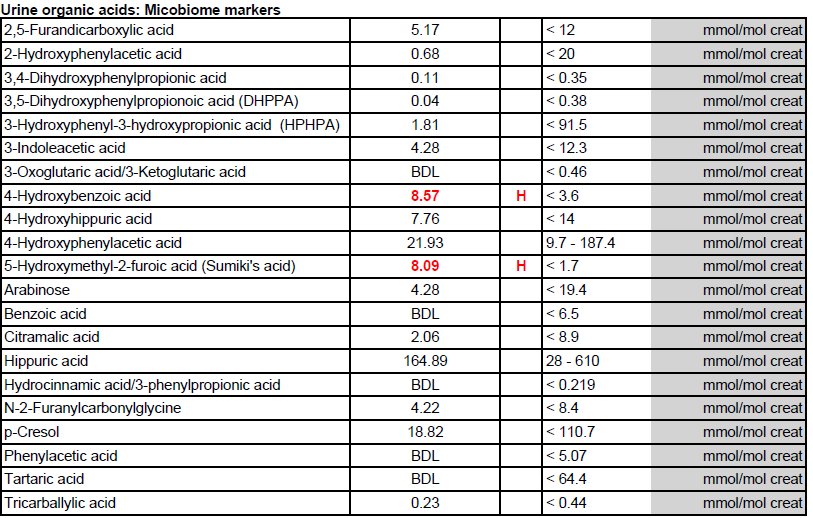
Lab’s comments: The microbial metabolic profile is suggestive of gut dysbiosis, primarily of yeast/fungal origin.
Dr Lindenberg’s comments: Mixed dysbiosis (imbalance) – bacterial and fungal: start treatment with Rifaximin and Fluzol and good probiotics.
1. Yeast
Candida albicans is the most common yeast naturally present in the human body. However, when it becomes overgrown, it can produce toxins that may contribute to symptoms such as fibromyalgia, migraines, chronic fatigue syndrome, brain fog, and depression.
The Organic Acids Test (OAT) can help detect Candida overgrowth. Elevated levels of Arabinose typically signal its presence, while markers like Tartaric Acid and 3-Oxoglutaric Acid can further support the diagnosis of a Candida infection.
When Candida becomes invasive, it can adhere to the intestinal lining, leading to leaky gut syndrome. This disruption of the gut barrier may result in food sensitivities, poor nutrient absorption, and various digestive disorders.
2. Mould
5-Hydroxymethyl-2-Furoic (Sumiki’s acid) 8.9 (result) H / <1.7 (range)
Aspergillus is a common fungal species found in the gastrointestinal tract, often introduced through contaminated food or water. It produces metabolites—such as 5-Hydroxymethyl-2-Furoic acid (Sumiki’s acid), Furan-2,5-dicarboxylic acid, and N-2-Furancarbonylglycine—which can be detected through advanced testing.
These markers are significant because Aspergillus can produce aflatoxins, a type of mycotoxin known to be carcinogenic. Aflatoxins are also toxic to the liver and kidneys. Furthermore, the presence of mould in the gut may suppress local immune function, increasing vulnerability to other microbial imbalances.
To help reduce fungal overgrowth, prescription or natural antifungals—used alongside high-potency, multi-strain probiotics—may be effective in restoring gut balance.
You can read an interesting article about mould, click here.
3. Fungus
Tricarballylic acid is a marker commonly associated with fungal overgrowth. Elevated levels can indicate the presence of a fungal infection in the body.
Fungal and yeast overgrowths can produce toxins that disrupt mitochondrial function, contributing to energy deficits, stress hormone imbalances, and nutrient malabsorption—all of which may impact overall health and metabolic efficiency.
Tricarballyllic Acid Inhibits the Krebs Cycle.
4. Bacterial
4-Hydroxybenzoic acid 8.57 (result) H / < 3.6 (range)
2-Hydroxyphenylacetic Acid, 4-Hydroxybenzoic Acid, 4-Hydroxyhippuric Acid, and Hippuric Acid are metabolic markers that often indicate bacterial overgrowth and gut dysbiosis.
Elevated levels of these compounds suggest imbalances in the gut microbiome, particularly in the small and large intestines. For example, 4-Hydroxybenzoic Acid can be elevated not only due to bacterial activity but also due to dietary sources and chemical exposures. This marker may rise after consuming certain foods such as almonds, strawberries, green tea, ginkgo, or oregano extract.
Additionally, 4-Hydroxybenzoic Acid is a metabolic byproduct of parabens, which are commonly found in jams, pie fillings, cosmetics, personal care items, pharmaceuticals, and processed foods. These compounds are widely used for their antimicrobial properties, extending shelf life by preventing microbial spoilage.
Parabens are synthetic derivatives of para-hydroxybenzoic acid (PHBA)—a compound that also occurs naturally in many fruits and vegetables, including cucumbers, cherries, carrots, blueberries, and onions. PHBA is also formed naturally in the human body through the breakdown of certain amino acids.
For more about Parabens, click here.
Hurray for the Good Bacteria!
DHPPA (3,5-Dihydroxyphenylpropionic acid) is a urinary biomarker that reflects the presence of beneficial bacteria in the gut.
This compound is produced when gut microbes break down chlorogenic acid and caffeic acid—naturally occurring substances found in coffee, tea, fruits, and vegetables. Elevated levels of DHPPA in urine are generally associated with a healthy population of gut bacteria, particularly Lactobacilli, Bifidobacteria, and certain strains of E. coli.
Increased DHPPA levels suggest an active and diverse microbial community capable of metabolising plant-based polyphenols, and are considered a positive marker of gut health.
(Based on the Great Plains Laboratory reference data)
5. Clostridia
Toxins produced by Clostridia metabolites can interfere with important brain neurotransmitters. Clostridia bacteria are linked to several gastrointestinal disorders, including irritable bowel syndrome (IBS), Crohn’s disease, and ulcerative colitis.
The most common clostridial infection is gastroenteritis caused by Clostridium perfringens (food poisoning), which is usually mild and often resolves without treatment.
Elevated levels of the markers 4-Hydroxyphenylacetic acid, HPHPA (3-(3-hydroxyphenyl)-3-hydroxypropionic acid), and 4-Cresol indicate a Clostridia overgrowth.
These compounds can inhibit the enzyme dopamine beta-hydroxylase, leading to increased dopamine levels and potential neurotransmitter imbalances. Notably, higher levels of HPHPA and 4-Cresol have been observed in individuals with autism, ADHD, and other psychiatric conditions.
4-Cresol is believed to consume tyrosine, an essential amino acid involved in the production of key neurotransmitters such as dopamine, norepinephrine, and epinephrine. Tyrosine also supports the function of hormone-regulating organs, including the adrenal, thyroid, and pituitary glands.
Other markers in the Microbiome:
- Indican (https://www.worldhealthlaboratories.com/indican) is a compound produced in the gut when the amino acid tryptophan is broken down by certain intestinal bacteria. Normally, tryptophan is absorbed and used by the body, but when there’s an imbalance or bacterial overgrowth, more tryptophan is converted into indole, which is then processed by the liver into indican and excreted in the urine. Indican levels can rise with a diet high in protein and low in fibre. Vegetarians typically have lower indican levels due to higher fibre intake and different gut bacterial profiles. Elevated indican is also seen in malabsorption disorders, such as celiac disease and hypochlorhydria (low stomach acid), where impaired digestion and absorption promote increased bacterial breakdown of tryptophan in the gut.
- Phenylacetic acid is produced primarily by certain gut bacteria during the breakdown of the amino acid phenylalanine. High phenylacetic acid levels may be associated with toxic buildup, impaired detoxification, and may impact neurological function due to its influence on neurotransmitter pathways. Phenylactic acid can increase with the ingestion of certain foods and drugs, exercise, gut dysbiosis, chronic alcoholism, and a metabolic disorder called phenylketonuria
- Phenylproprionate (also known as phenylpropionic acid) is a metabolite produced by certain gut bacteria during the breakdown of the amino acid phenylalanine. It can increase in phenylketonuria
Causes for Yeast and Bacterial Overgrowth:
- Antibiotics
- Stress
- Diets, like the High Protein Diet, High Carbohydrate and sugar diets and diets high in Sulfates.
- Lowered immune system response
- Some medications, like antacids, antipsychotics, Metformin, opioids and Statins.
Damages to the Mitochondria?
Fungal overgrowth—particularly from organisms like Candida or Aspergillus—can disrupt mitochondrial function in several key ways:
🧬 1. Mycotoxins Directly Damage Mitochondria
Fungi release mycotoxins (e.g., aflatoxins, ochratoxin A, gliotoxin), which:
-
Interfere with mitochondrial membranes, damaging their structure
-
Inhibit enzymes in the electron transport chain (ETC), reducing ATP production
-
Increase oxidative stress, leading to mitochondrial DNA damage
⚡ 2. Tricarballyllic Acid Inhibits the Krebs Cycle
-
Tricarballyllic acid, a fungal metabolite, chelates magnesium, a critical cofactor in mitochondrial enzymes.
-
It can inhibit aconitase, a key enzyme in the Krebs (TCA) cycle, thus blocking energy production at its core.
🌪 3. Induction of Oxidative Stress
-
Fungal toxins stimulate the production of reactive oxygen species (ROS), overwhelming the cell’s antioxidant defences.
-
This leads to mitochondrial membrane potential loss, swelling, and impaired ATP synthesis.
🔄 4. Mitochondrial DNA Damage
-
Chronic exposure to fungal toxins can result in mutations or damage to mtDNA, impairing the ability of mitochondria to replicate and function properly.
🔬 5. Disruption of Mitochondrial Biogenesis
-
Toxins and inflammation can block the expression of genes (e.g., PGC-1α) involved in creating new mitochondria, reducing the body’s ability to recover from energy deficits.
PLEASE NOTE: ANY VIEWS REGARDING THE RESULTS ARE MY UNDERSTANDING AND DO NOT SERVE AS PROFESSIONAL ADVICE. THE TREATMENT RECOMMENDATION IS STRICTLY RELATING TO ALEX’S RESULTS AND NOT MEANT FOR SELF-TREATMENT. ALWAYS SPEAK TO YOUR HEALTHCARE PROVIDER BEFORE STARTING ANY TREATMENTS.
(updated 30/09/2023 @ 11:58)