Part of the Autism Myths Explained series — The Same, but Definitely Ausome
If you’ve spent any time in autism parent groups, you’ve been told to try cutting out gluten. Or dairy. Or sugar. Or all three, plus corn, soy, and a dozen “hidden” ingredients you didn’t know were problems. Diet and autism is one of the most persistent myths in this space — partly because it isn’t entirely made up. There’s a real story here. It’s just not the one most people have heard.
This post updates and replaces an old diet roundup from 2017 — a lot has changed in the evidence base since then, though, tellingly, not as much as you’d hope.
Where this myth comes from
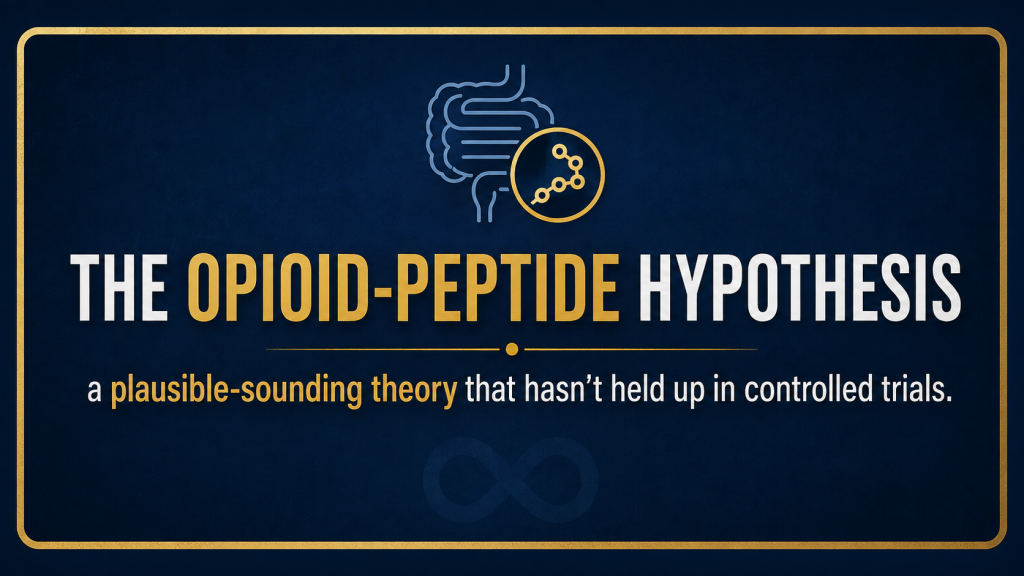
The most common theory — the one behind the Gluten-Free/Casein-Free (GFCF) diet — is sometimes called the “leaky gut / opioid peptide” hypothesis. The idea is that undigested fragments of gluten and casein cross a permeable gut lining, enter the bloodstream, and act like opioids in the brain, worsening autism symptoms. It’s a plausible-sounding theory. It just hasn’t held up when tested properly.
What the GFCF evidence actually shows
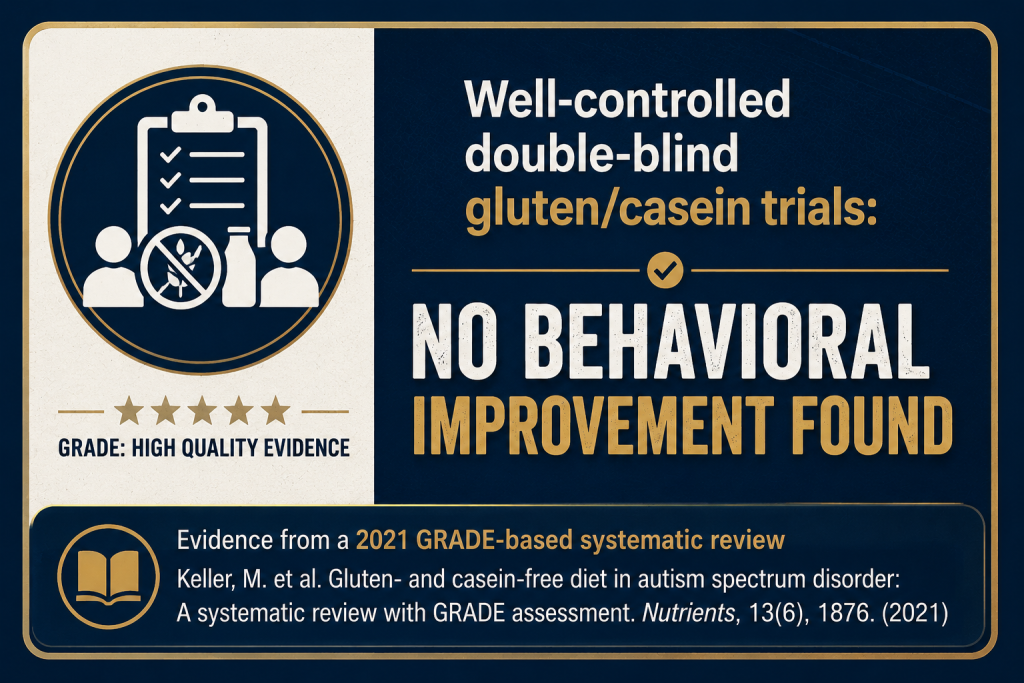
Multiple systematic reviews between 2021 and 2025 have looked at properly blinded, controlled GFCF trials. The consistent finding: no significant effect on core autism traits. Where parents do report improvement, it tends to track something real but different — resolving an actual food intolerance or GI discomfort, not a change in autism itself. A 2021 GRADE-based systematic review (Keller et al., Nutrients) found no behavioral improvement in well-controlled, double-blind gluten/casein trials.
What a real diet-based “cure” actually looks like
It’s worth pausing on this, because it explains why these claims fail, not just that they fail.
Diet genuinely does treat some conditions — phenylketonuria (PKU) and celiac disease are the clearest examples. Look at what those conditions have that autism diet claims don’t:
- A confirmed biomarker before treatment starts. PKU is diagnosed with a blood test; celiac disease with antibody testing and biopsy. The diet follows a diagnosis — it isn’t prescribed on a hunch.
- A known biochemical mechanism. Researchers can explain exactly why removing the trigger should work, and that mechanism has been directly tested.
- A clean dose-response relationship. Remove the trigger, symptoms improve in a predictable way. Reintroduce it (as in a celiac gluten challenge), symptoms return.
- Controlled trials that isolate one variable at a time.
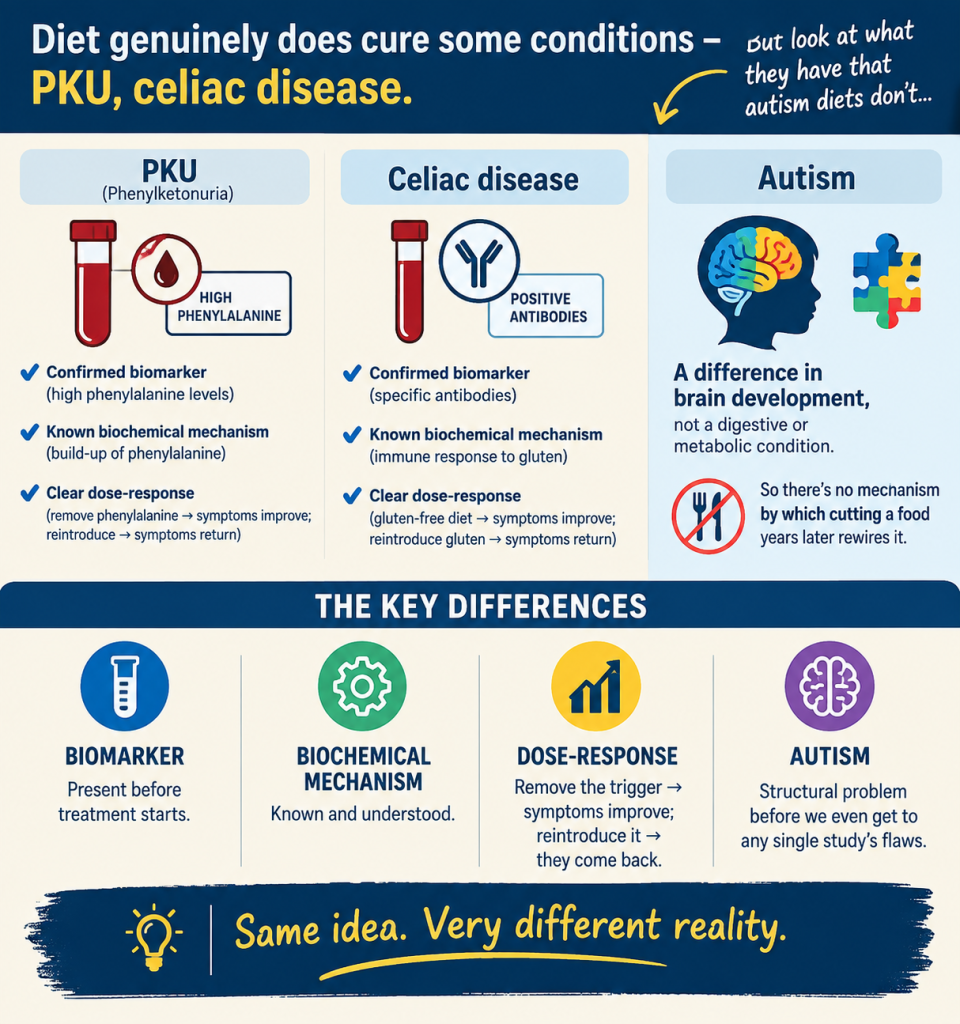
Autism is a neurodevelopmental difference in brain structure and connectivity, present from early development. It isn’t a digestive or metabolic condition. There’s no plausible mechanism by which removing a food years later rewires how a brain is built. That’s the structural problem with this whole category of claim — before you even get to any individual study’s flaws.
The 2017-era diet list, revisited
Our original 2017 post rounded up the most common therapeutic diets circulating at the time. Here’s where each one actually stands:
Specific Carbohydrate Diet (SCD) — Removes complex sugars and starches on top of gluten and casein, based on a “yeast and bad bacteria overgrowth” theory. Same gut-dysbiosis logic as GAPS (below), same evidence gap: no controlled trials showing an effect on core autism traits.
Body Ecology Diet (BED) — Built on the idea of restoring microbial balance through fermented foods, “good” fats, and reduced carbs. Plausible-sounding, unproven — no rigorous autism-specific research behind it.
Low Oxalate Diet — A different mechanism from the others (oxidative damage from oxalate crystals rather than gut-brain signaling), and essentially no autism-specific research exists to support it.
Feingold Diet — Eliminates phenols, salicylates, and artificial ingredients. Interestingly, this was the top-rated diet for “overall benefit” in a 2023 survey of 818 parents — but that’s parent-reported perception, not trial evidence. It has more legitimate history than most on this list, since it was originally developed for hyperactivity, where there’s some real evidence — but not specifically for autism.
Lutein-Free Diet — Eliminates a pigment nutrient found in leafy greens and orange produce, based on a claim that it triggers allergic reactions. Worth flagging: lutein isn’t a recognized common allergen in mainstream allergy literature, so this claim deserves particular scrutiny.
GAPS Diet (Gut and Psychology Syndrome) — Developed by Dr. Natasha Campbell-McBride, this is a stricter cousin of GFCF: grain-free, sugar-free, heavy on bone broth and fermented foods. Same gut-brain theory as GFCF, just more restrictive — which means the same lack of evidence, plus a higher nutritional risk, especially for kids who are already selective eaters.
Candida-Free Diet — Another yeast-overgrowth variant. Same story as SCD and BED.
The more complicated cases: keto and omega-3
Not everything on this list is equally weak, and it’s worth being honest about that.
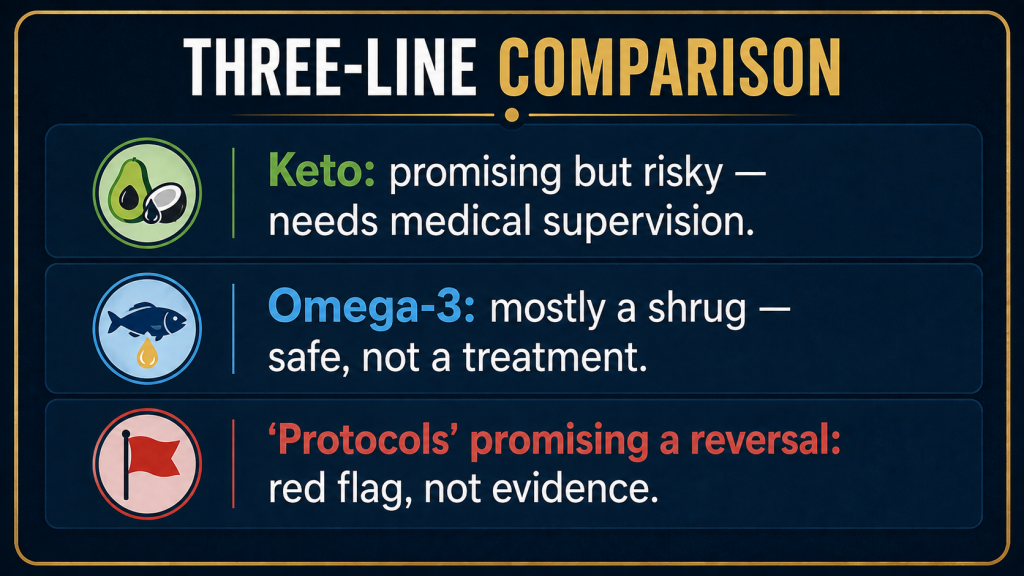
Ketogenic diet: Small, mostly unblinded studies report some gains in sociability, anxiety, and GI symptoms. But the field’s own scoping reviews describe the evidence as “facts or fads,” and there are real medical risks without supervision — including a documented case of scurvy in an autistic child on a keto diet. Worth knowing: keto has genuine, well-established evidence for a completely different condition — epilepsy — where the mechanism (raising the seizure threshold via ketosis) is well understood. That mechanism doesn’t transfer to autism, which isn’t a seizure-threshold problem. Some autistic children do have co-occurring epilepsy, and keto may help that — which may explain some of the anecdotal reports.
Omega-3 fatty acids: Even weaker footing. A 2011 Cochrane review found only two small randomized trials covering 40 children total. More recent meta-analyses, even with more trials included, still found no effect on social interaction, communication, stereotypy, or hyperactivity. It’s safe. It’s just not a treatment.
Branded “protocols” — repackaging weak evidence as a system
The N*k Protocol is worth naming specifically because it’s a good example of how this works. It combines omega-3s (olive oil, fish oil) with a prebiotic fiber (inulin), based on a theory that autism results from brain inflammation and toxicity from propionic acid produced by gut bacteria overgrowth. The individual ingredients carry the same thin evidence already covered above. There is no large-scale, peer-reviewed controlled trial behind the protocol itself — what exists is survey-based research relying on parent questionnaires, not a clinical trial. When a protocol’s marketing uses language like “reversing autism,” treat that as a red flag in itself — no legitimate intervention claims to do that.
When credentials meet the same problem
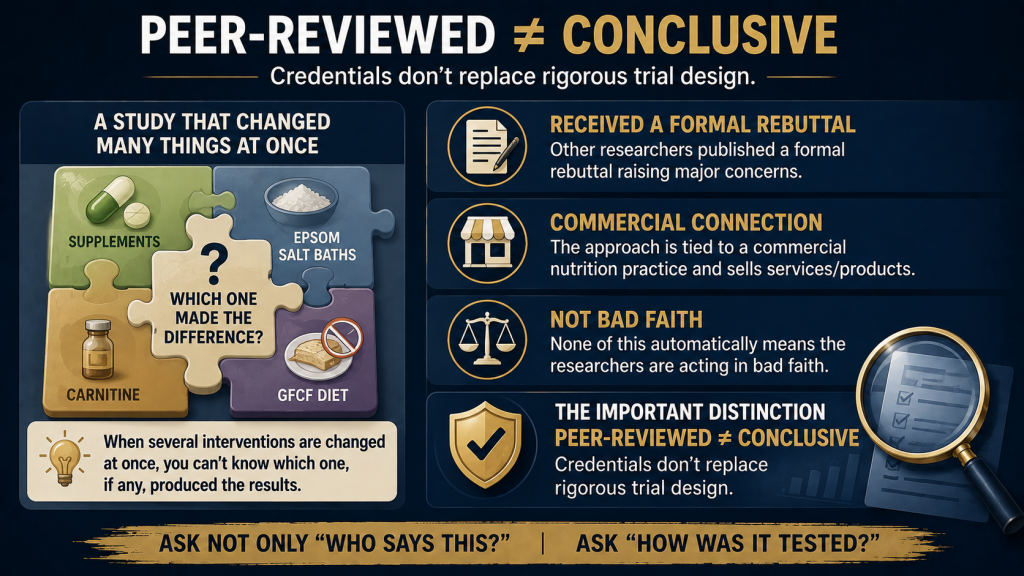
This is also why credentials and peer-reviewed research need to be looked at in context. A study can be published in a scientific journal and still have important limitations. For example, one autism nutrition study tested a whole bundle of interventions at once, including supplements, Epsom salt baths, carnitine and a GFCF diet. When several things are changed simultaneously, you can’t tell which intervention, if any, produced the result. The study also received a formal published rebuttal from other researchers. This illustrates an important distinction: peer-reviewed doesn’t automatically mean conclusive. Credentials don’t replace rigorous trial design, and a published study is evidence to examine, not a verdict.
Why “better health ≠ cure” matters here specifically
GI issues are genuinely more common in autistic children than in the general population. Fixing a real food intolerance or digestive problem can make a real difference — better comfort, better sleep, better behavioral regulation. None of that changes the underlying neurotype.
Conflating symptom relief with “cure” does real harm. It sets parents up for guilt when a diet doesn’t deliver on a promise it was never going to keep. And it can lead to increasingly restrictive diets with genuine nutritional cost — a risk that compounds with anything as restrictive as GAPS, SCD, or a multi-part “protocol,” especially in kids who are already selective eaters.
The bottom line
Better health isn’t a cure — and it doesn’t need to be. Autistic kids deserve to feel physically well and be accepted as autistic. Those two things aren’t in tension. The myth only survives by pretending they are.